Reviews
ScreenKite Review - The Mac Screen Recorder Your AI Agent Can Edit
We've tested ScreenKite, a native Mac screen recorder and video editor that hands its timeline to your own AI agent, with auto zoom, 3D device mockups and on-device captions.
We've tested Atoms, a vibe coding tool that goes beyond AI coding copilots with a multi-agent workflow, full-stack app generation, Atoms Cloud hosting, and launch-oriented tooling for founders.
Welcome to this Atoms review!
If you've tried the new wave of vibe coding tools recently, you've probably noticed the same pattern: one product helps with UI, another scaffolds some backend, another deploys, and you still end up orchestrating the whole thing yourself. That can work if all you want is a coding copilot. It is much less attractive if what you actually want is a launched product.
That is the gap Atoms is trying to close. It positions itself less as an AI coding tool for writing code and more as an AI product-building system for founders and builders who want a true vibe coding workflow — describe the product in plain English, let specialized AI agents execute, and ship something usable. The promise is big: a multi-agent build pipeline, full-stack app generation, managed backend and hosting through Atoms Cloud, and launch-oriented tooling in one place. In this review, we'll look at what stands out, where Atoms feels genuinely differentiated versus other vibe coding tools, and what you should validate before going all in.
The first thing Atoms gets right is product direction.
Yes, the homepage makes the ambition clear with "Turn ideas into products that sell." But the more important part is that the logged-in dashboard actually supports that framing. Instead of dropping you straight into a raw editor, Atoms pushes you toward New Project, Templates, and reusable UI themes, which makes the entry point feel more like a launch system than a generic coding sandbox.
The onboarding story is also intentionally founder-friendly:
The site does pack a lot onto one long page, and some of the proof points are still more marketing-heavy than product-deep. But once you cross into the actual app, the story becomes clearer: Atoms is trying to make execution approachable for founders, not just for developers who already know what stack they want.
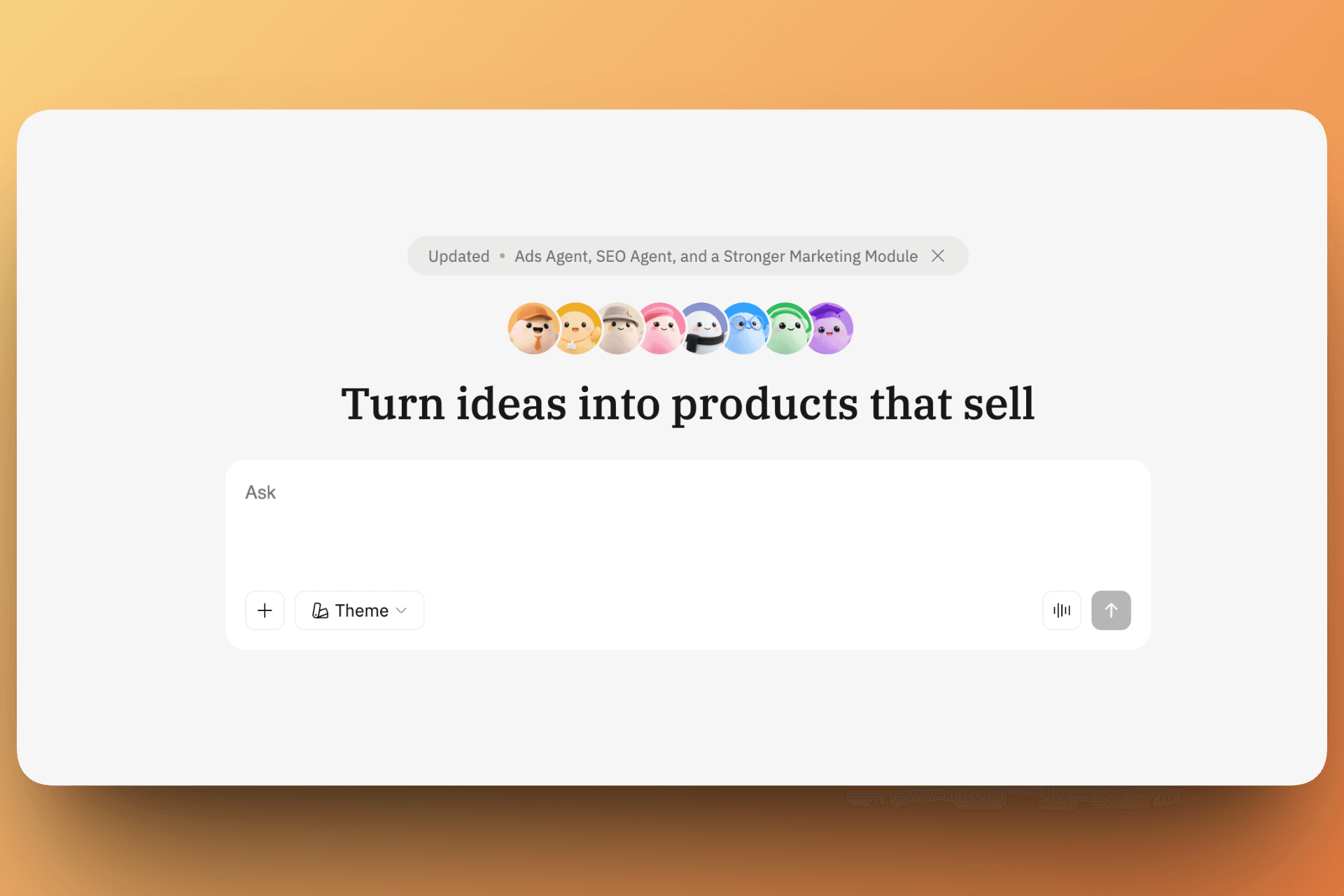
This is where Atoms separates itself most clearly from other vibe coding tools.
Most AI app builders are still organized around a single prompt that tries to do everything at once: plan, code, style, deploy. Atoms breaks that apart into a team of specialized AI agents, each with a defined role in the build process:
This is a big shift versus classic vibe coding workflows. Instead of asking one AI to guess everything, you get a build pipeline where research, architecture, engineering, and growth are handled by agents that each stay in their lane. For non-technical founders, this is particularly useful because you do not need to translate a vague idea into a perfect prompt — the Researcher and PM agents do part of that work for you.
The result is a product that feels less like a chat window and more like an operating team. It is one of the strongest arguments for Atoms as a serious vibe coding platform rather than a one-shot code generator.
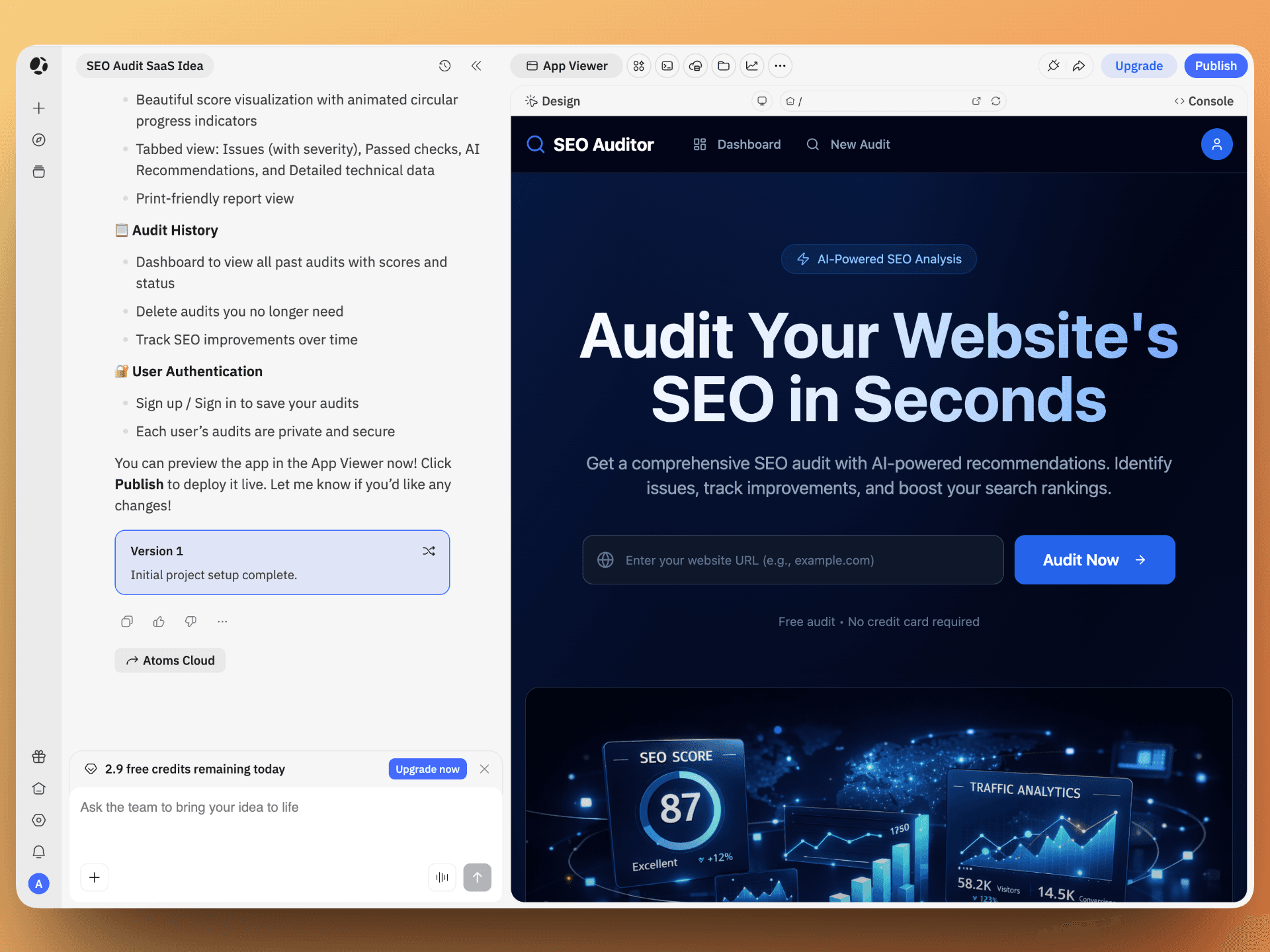
Because of that agent structure, the product feels noticeably more guided once you are inside a real project.
Instead of behaving like a blank prompt box where everything depends on one-shot instructions, Atoms gives the build process more shape. In a live project, you can follow the execution step by step, review what is happening, approve direction changes, inspect file-level actions, and move between implementation, visual review, and publishing.
That changes the feel of the product. It is still AI-driven, but it feels much more operational than a lightweight coding chat. For founders and fast-moving builders, that matters because it keeps the project understandable while the platform handles more of the execution behind the scenes.
Atoms is strongest when it talks about the "real app" layer.
Atoms clearly wants to be more than a mockup generator. The product messaging specifically calls out:
That is reinforced by Atoms Cloud, the managed backend layer behind the platform. According to the public feature pages, Atoms Cloud includes user login, database, integrations, and scalable hosting, which makes the offer more complete than tools that stop at UI generation.
More importantly, the logged-in product makes that full-stack claim feel real. Inside the workspace, Atoms exposes file-level actions like Read file, Write file, and Update file, plus App Viewer, Visual Review, Publish, version history, and direct access to Atoms Cloud.
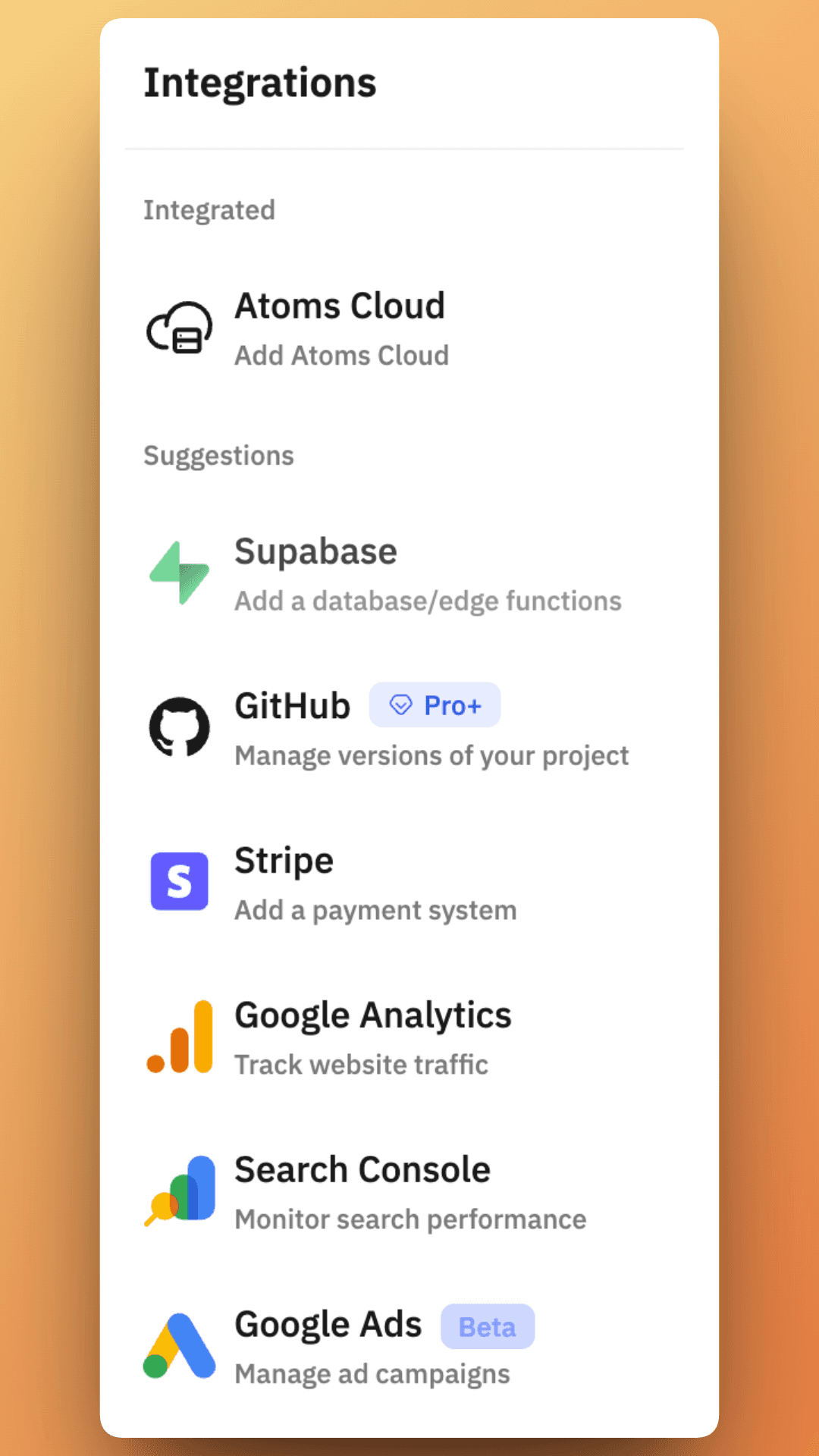
The integrations layer also helps here. In-app, Atoms highlights:
That is a much stronger signal than a generic prompt box. It looks like a system designed to move from planning to implementation to deployment and growth tooling in one place.
Two details also help Atoms feel more serious than lightweight AI builders:
This is an important distinction. Plenty of AI tools can generate interfaces. Fewer position themselves as something you can actually deploy, monetize, and keep control over as the product grows.
Atoms also does a better job than most AI builders of connecting product generation to actual launch execution.
Inside the product, that launch-oriented workflow feels more concrete:
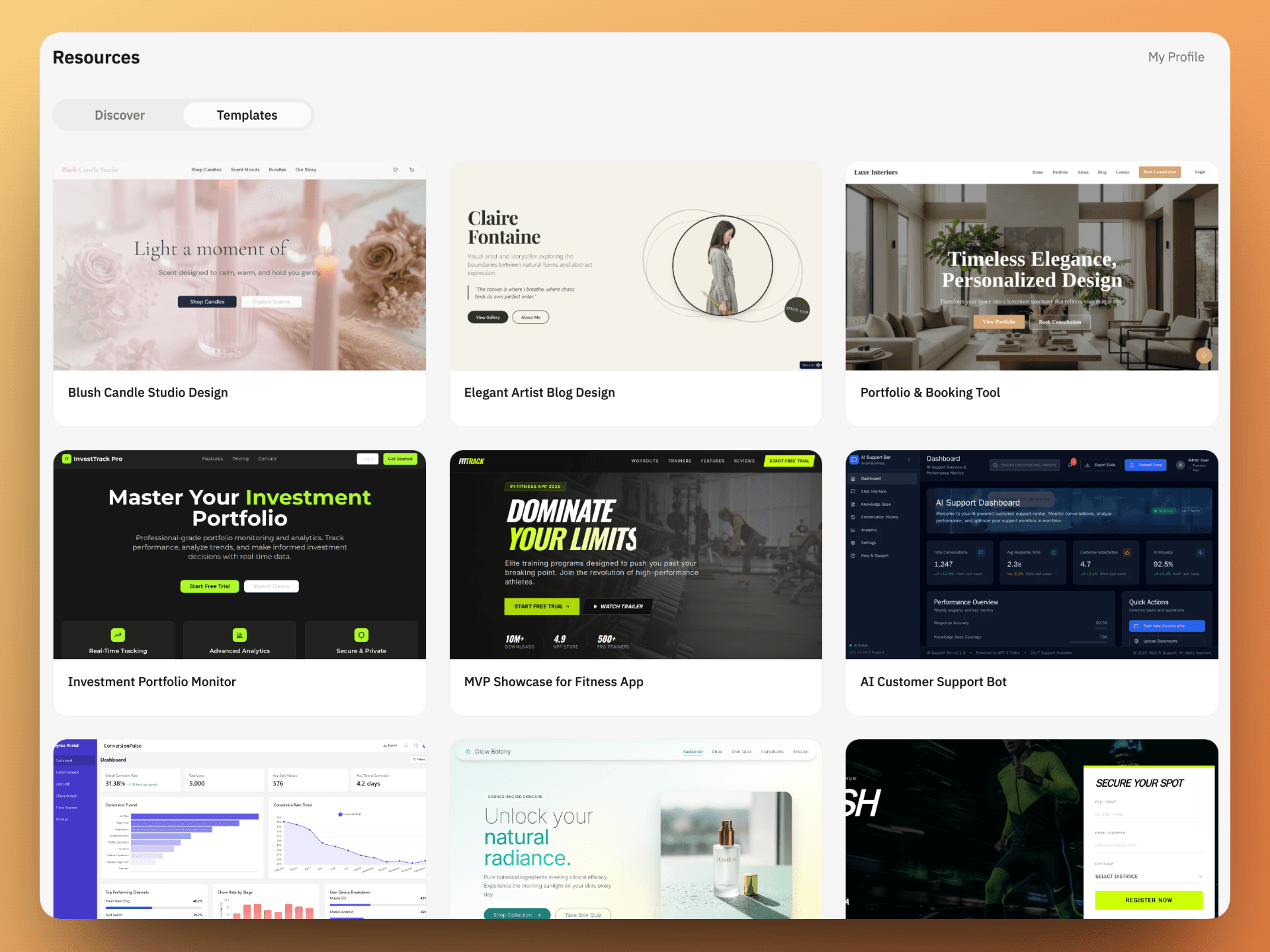
The template layer is stronger than the homepage alone suggests. Inside the app, there is a browsable template gallery with concrete starters across portfolio sites, booking flows, analytics tools, support apps, SaaS pages, event registration, and e-commerce-style use cases. You can open a template, inspect it, and remix it into your own project instead of treating templates as static inspiration only.
That is a subtle but important choice. It shows Atoms is aiming at concrete product types rather than abstract components or generic prototypes.
The whole experience is designed for people who want to describe what they are building in plain English, then move quickly into editing, deploying, and iterating without stitching together six separate products.
This is one of the more interesting parts of Atoms, and a real gap in most vibe coding tools today.
Most AI app builders generate output that looks fine in a browser but is poorly structured for search: client-rendered markup, no clean URL hierarchy, weak metadata, and pages that simply do not get indexed. Atoms pushes in the opposite direction. The generated websites and apps are designed to produce crawlable pages, clean structure, and search-ready output — not just functional UI.
A few things make that difference concrete:
That said, this is still a relatively young layer, and the fully automated search and growth workflow looks like something the team is actively building out. But the direction is already well ahead of most vibe coding tools, which largely ignore the distribution side of shipping a product.
If you care about building products that can get discovered, not just generated, Atoms is speaking a language that most AI coding tools still ignore.
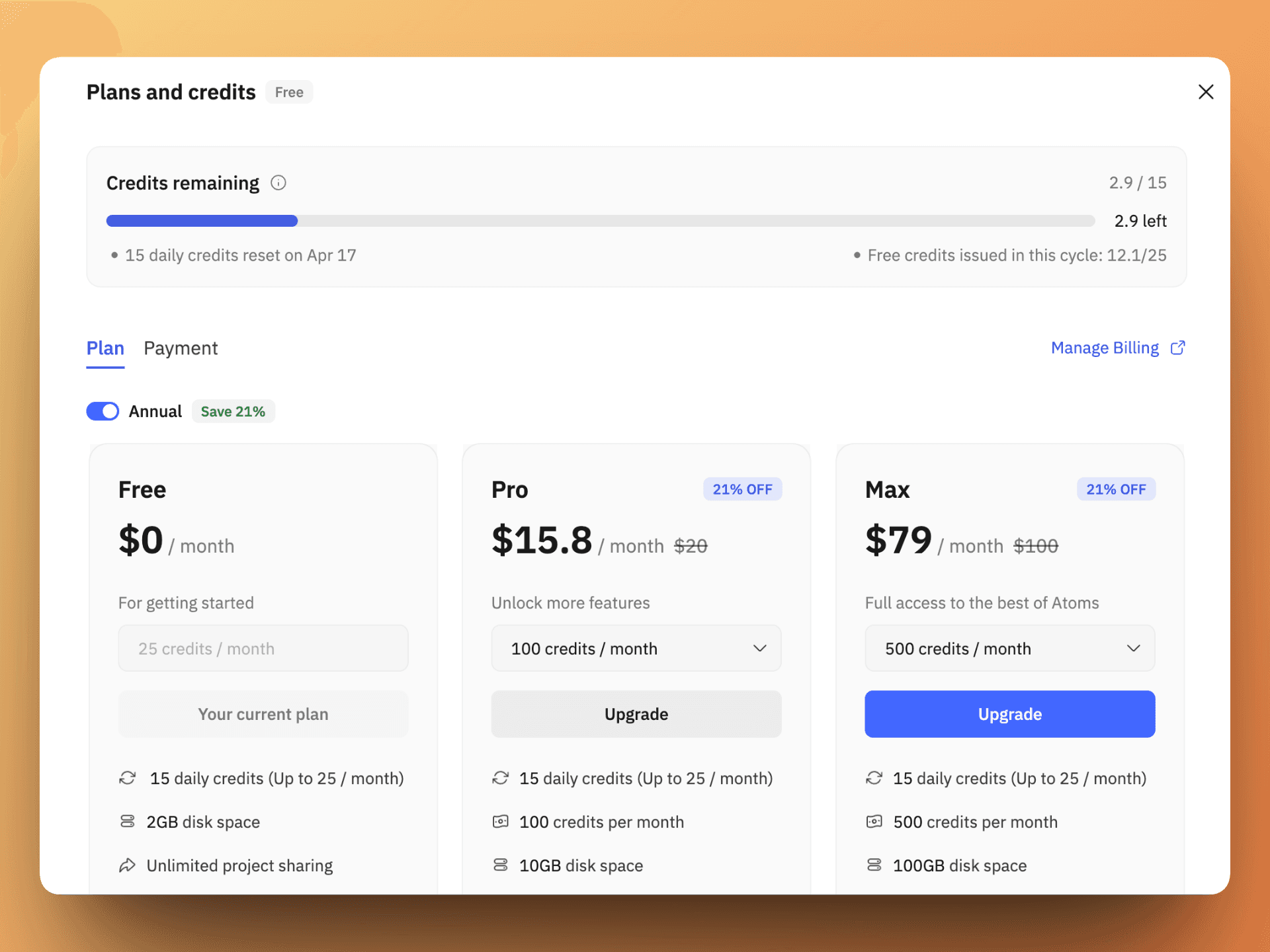
Atoms uses a credit-based pricing model with three main tiers:
The credit model is the main thing to understand before committing.
Inside the product settings, the current structure appears as:
The good part is that the pricing maps fairly well to who Atoms is for: curious builders can start free, serious solo builders can move into Pro, and heavier users get more compute on Max.
The tradeoff is that credit-based pricing always requires a bit more mental accounting than flat unlimited plans. If you plan to use Atoms intensively, you will want to understand how quickly credits get consumed in real workflows.
Atoms is a strong fit for:
It is less obviously the right fit if your main need is fine-grained engineering control from day one, or if you already have a mature development stack and only want a narrow AI coding copilot layer.
Atoms stands out because it is trying to be more than a coding assistant.
Its real differentiation comes from combining a multi-agent build pipeline, full-stack delivery, SEO-ready output, and a founder-oriented workflow in one place. The product story is coherent: start from an idea, let specialized agents research, architect, and build it, host it on Atoms Cloud, and move toward launch faster without piecing together a separate stack.
Compared to the broader category of vibe coding tools, this is also where Atoms' take on vibe coding vs traditional coding starts to feel distinctive — you are not replacing a developer seat with a chatbot, you are orchestrating a team of agents that cover the full product lifecycle.
What I liked:
Things to keep in mind:
If you want a tool that thinks in terms of products, launches, and customers rather than just code generation, Atoms is one of the best vibe coding tools to watch right now.
Reviewed product
Atoms is the first AI Team to turn ideas into businesses
Category
DevelopmentPricing
FreeTags
Context.dev Review - One API for Scraping, Logos & Brand Data
We've tested Context.dev, a unified Scraping API, Logo API and Brand API that turns any domain into structured, AI-ready data. Markdown crawling for LLMs and RAG, a Clearbit-style Logo Link, and a full Brand API to personalize SaaS onboarding.
The Best Tools to Grow on Reddit in 2026
Discover the best tools to grow your brand on Reddit. From monitoring mentions to automating engagement with AI, these Reddit growth tools help you build community presence, generate leads, and avoid bans while scaling your Reddit marketing strategy.